Naru
Toolsets, approval and audit
One toolset is one MCP address. It decides which tools are offered, to whom, with what approval, and every call is recorded in the audit log.
Toolsets
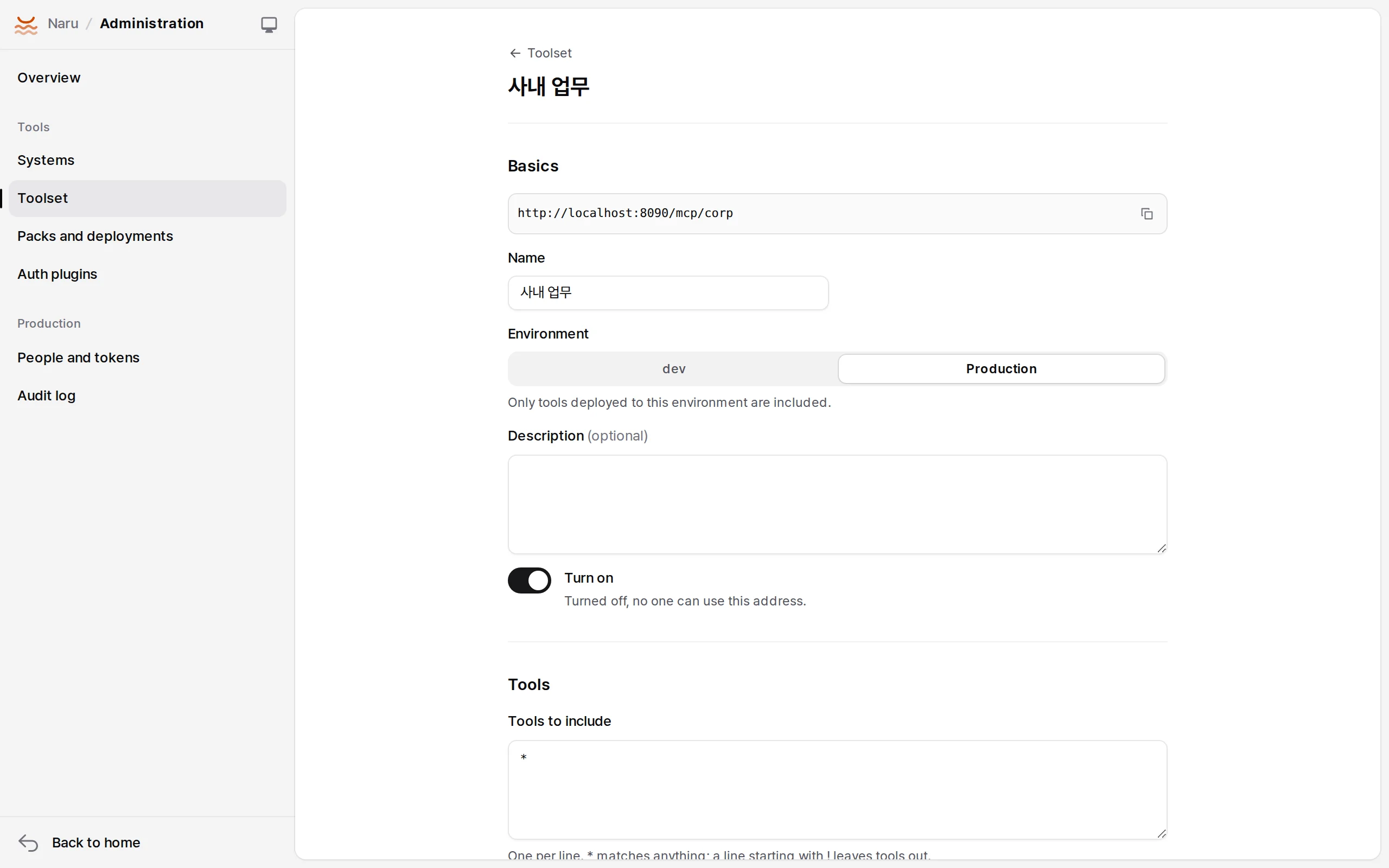
/mcp/<toolset> is one virtual MCP server. One Galpi MCP connection or one Mothership connector maps to one toolset.
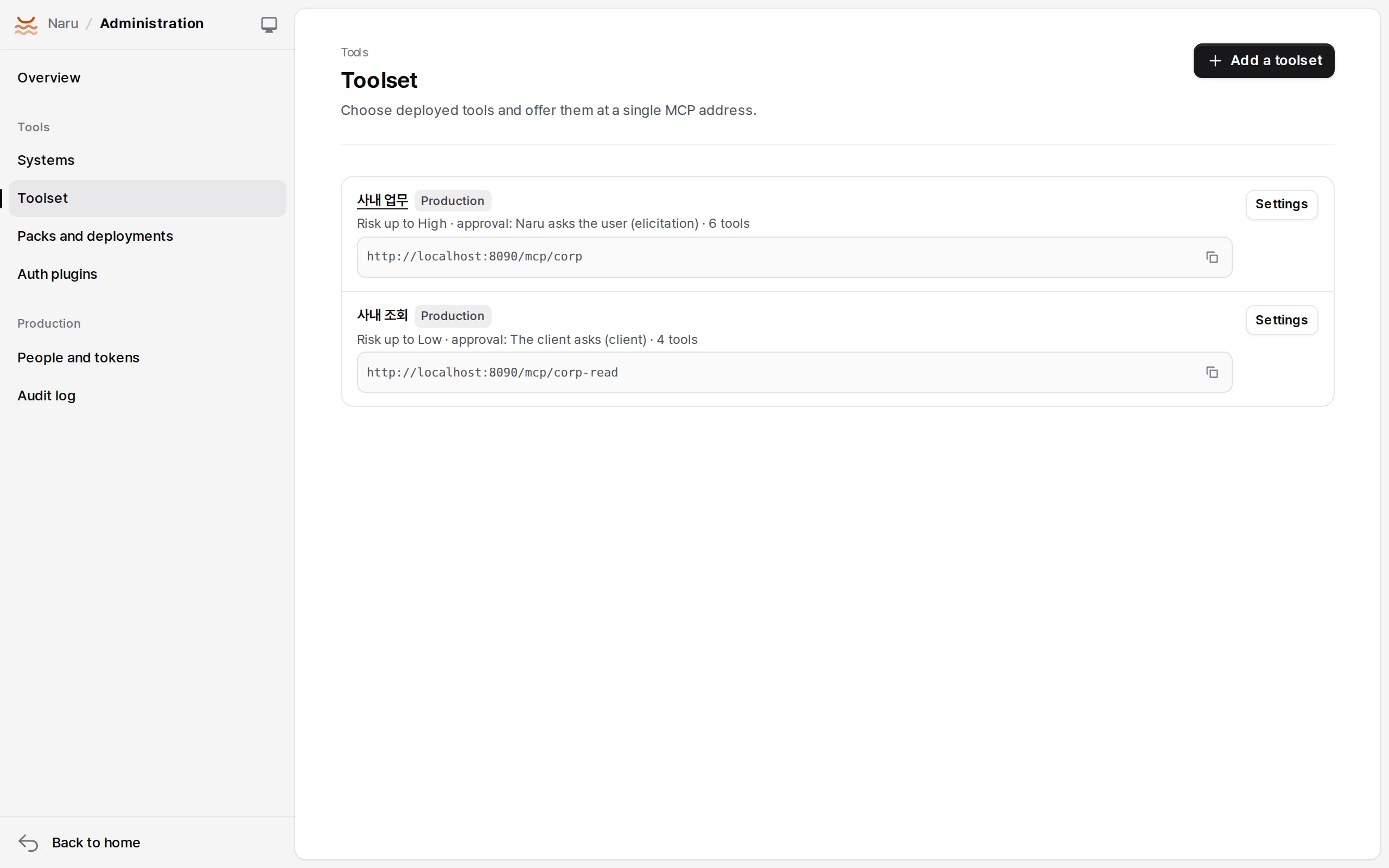
| Field | Meaning |
|---|---|
include |
Tool patterns (erp_api_*, !groupware_*) |
maxRisk |
The highest risk offered (low, medium (default), high) |
approval |
Approval for high-risk calls: elicitation (ask the person over MCP), client (trust the client's approval; from Mothership the Runtime approval claim is required), none |
masking |
Output masking. Resident registration numbers always; add phone, card, email and custom regexes |
access |
Roles, groups, users, services |
allowNonProduction |
Whether a prod toolset accepts calls from Mothership's non-production environments (previews …); refused by default |
toolsets.yaml
slug: corp-read
env: prod
name: Company lookups
include: ["*", "!groupware_*"]
maxRisk: low
approval: client
access: { services: [mothership-acme] }
Coming in
| Who | How |
|---|---|
| People (MCP clients) | Naru's OAuth 2.1 authorization server: protected-resource metadata per toolset, DCR, PKCE S256, resource indicators. Access 1 hour, refresh 30 days (rotated) |
| People (scripts) | Personal tokens naru_pat_… |
| Services | Service tokens naru_svc_…. With a signed user assertion they become that person (Mothership, Galpi pairing) |
| Development | Development tokens naru_dev_…, for the development MCP (/dev/mcp) only |
Tokens are issued in Administration → People and tokens → Tokens and shown once.
Audit log
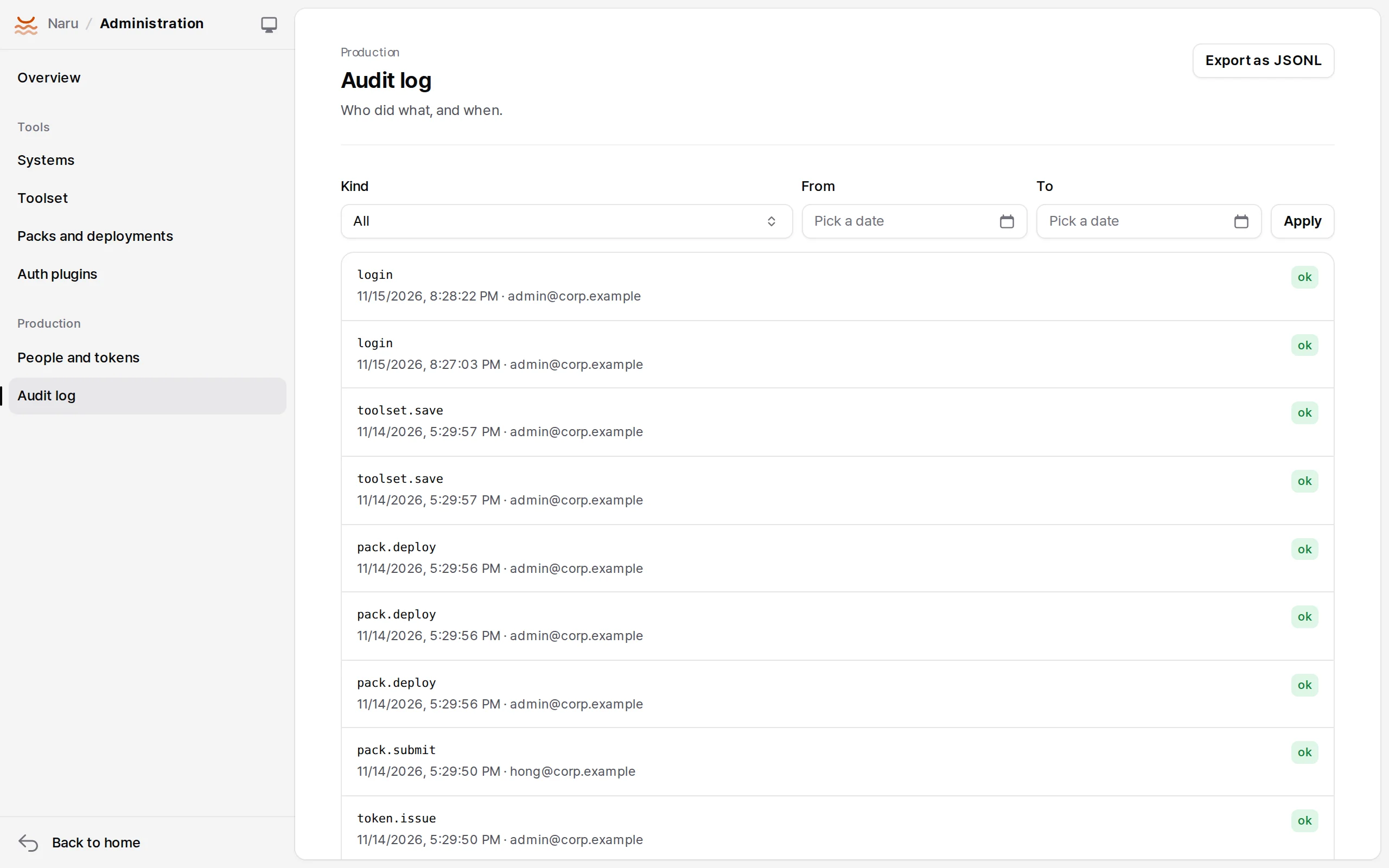
Every tool call, sign-in, personal account link and unlink, configuration change, deployment and token issue is recorded.
- A tool call is recorded as
startedbefore it runs and updated with the outcome. If it can't be recorded, it doesn't run. - Input is hashed by default; with
audit: { input: 'full' }the masked original is kept. - Retention is
NARU_AUDIT_RETENTION_DAYS(730 by default). - SIEM export reads forward with a cursor:
naru-admin audit --after 0 --jsonl > audit.jsonl. It ends by writing the next cursor (--after N) to standard error.
Keeping secrets in
- Naru remembers the secrets it handled (system and personal secrets, cookies and tokens from plugins) and replaces them with
«redacted»wherever text leaves it: tool results and errors, free text in the audit log, server log lines, admin API errors. - Requests changed by plugins (API keys in queries, auth headers, signatures) never return to the function.